Classical Orders and its influence over Georgian Architecture
The typical English Georgian facade with a portico took its design from the ancient Greeks and was used to grand effect in the Pantheon in Rome. With its recognizable flutes and entablatures, the columns stand tall and firm, decorated with scroll like volutes, just like the Erechtheum, in Athens, these classical orders, withstand the test of the centuries architecture, even in the modern world.
These free-standing grand columns were so common in greek architecture, and so widely used due to its affordability to build during 750-480 BC, that it spread widely from 18th century onwards.
Vitrivius was a genius who came up with the classical architectural works occurring between 8th century BC and 6th century AD on the mediterranean sea. It is the period in which greek and roman society flourished, and the Parthenon was an iconic stature of greek culture. 1400 years.
Classical antiquity, which began in 8th century BC, is surprisingly continuing to influence architecture all over the world. It is on elf the most prestigious looking forms of architecture, and is nowadays, rare and expensive to build in accordance with its classical order designs.
Now known as ‘new classical architecture’, The doric, ionic and corinthian styled pillars are forever etched in 17th and 18th century buildings in england, europe and america.
According to Vitruvius the height of Doric columns is six or seven times the diameter at the base.[10] This gives the Doric columns a shorter, thicker look than Ionic columns, which have 8:1 proportions. It is suggested that these proportions give the Doric columns a masculine appearance, whereas the more slender Ionic columns appear to represent a more feminine look. This sense of masculinity and femininity was often used to determine which type of column would be used for a particular structure.
The allure of the romantic corinthian column
The earliest use of the final classical order the corinthian order, derived from the city of corinth, has a uniquely creative story to it. Its earliest use can be traced back to the Late Classical Period (430–323 BC), where according to the architectural historian Vitruvius, the column was created by the sculptor Callimachus, probably an Athenian, who drew acanthus leaves growing around a votive basket.
Much later, the Roman writer Vitruvius, related that the Corinthian order had been invented by Callimachus, a Greek architect and sculptor who was inspired by the sight of a votive basket that had been left on the grave of a young girl. A few of her toys were in it, and a square tile had been placed over the basket, to protect them from the weather. An acanthus plant had grown through the woven basket, mixing its spiny, deeply cut leaves with the weave of the basket.[9]

The romans also practiced their own style of the corinthian order, and the earliest of these would be seen at the temple of Mars Ultor in the Forum of Augustus (c. 2 AD).

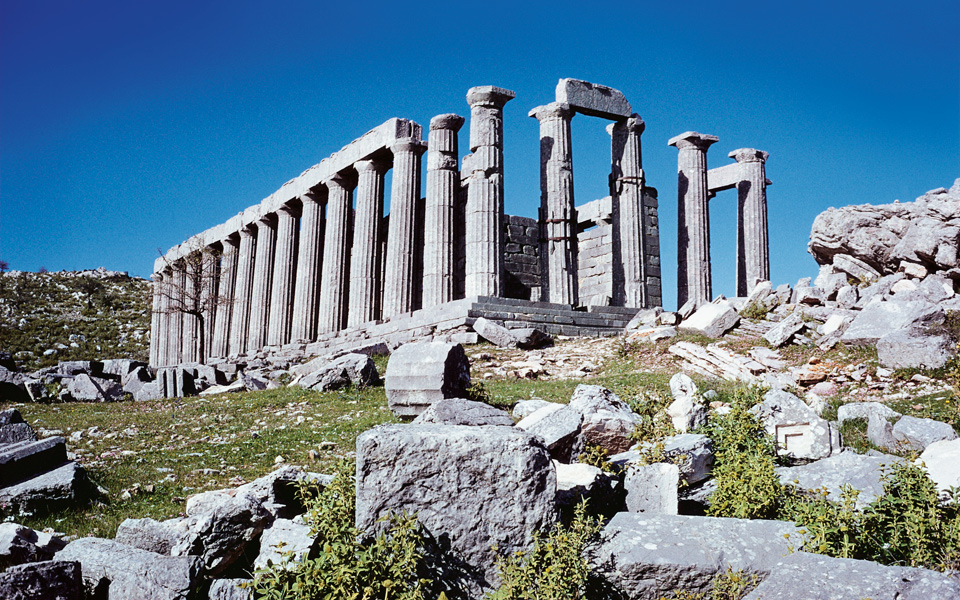
The oldest known example of a Corinthian column is in the Temple of Apollo Epicurius at Bassae in Arcadia, c. 450–420 BC. It is located northeast of Figaleia, which is in Andritsaina (west greece).Bassae is an archaeological site in Oichalia, a municipality in the northeastern part of Messenia, Greece. The temple’s remoteness has caused it to be in ruins.
When archeologists found it, they discovered the metopes of an external Doric frieze and an over-life-size statue. The frieze was constructed in 400 – 420 BC. he room where the frieze is displayed was specially constructed to be the same size as the main room in the Temple of Apollo. However, in the original placing they would have been seven metres in the air and close to the ceiling. The reconstruction puts the frieze at an easily viewable height. More of the frieze illustrations can be found in charles cockerels reconstruction on the Bassae.
The Doric Orders
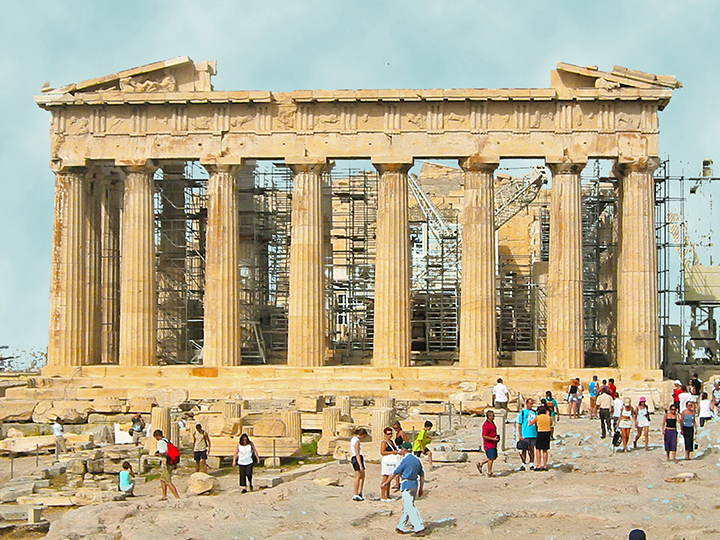
Although the doric orders had no base or stylobate, it was still elegant, because its beams later smoothed to the top of the abacus, Its entasis was larger at the bottom, due to strength and resilience, however the greeks did struggle with spacing the triglyphs. I dont know why, but it could have been due to mathematical errors, which required more sophisticated methods during 400 BC. I would like to add that the Parthenon, does display problems of its triglyphs requiring architrave support , and this was not a harmonious design during the era.
Below, is a photo of the parthenon showing this exact problem. It is the clearest photo I found in terms of the front view of the image. Notice the columns sticking out of the triglyphs.
The Bassae in Messenia, Greece, was one of the most interesting locations, partly because its elevation is above 1,131 meters above sea level, on the slopes of kotylion mountains. I wonder how the greeks had access to that location , while climbing up and carrying tonnes of marble and concrete. The architect of the Bassae was the same architect of the Parthenon.

Ictinus was active in 5th century BC, and though he built the Bassae, not much is known about him. There is a painting by Jean Auguste Dominique Ingres, showing Ictinus with lyrical poet pindar, but other than that, Ictinus is an enigma.
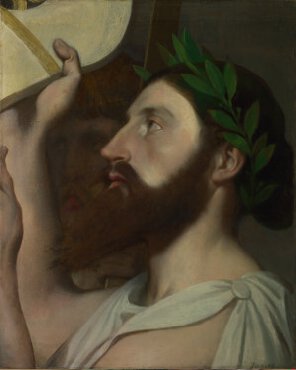
In the spirit of classical art, this photo struck me as beautiful because of the value of the light projected onto the oil. The same artist as the one who painted Ictinus the architect. The artist’s name is Jean Auguste Dominique Ingres.
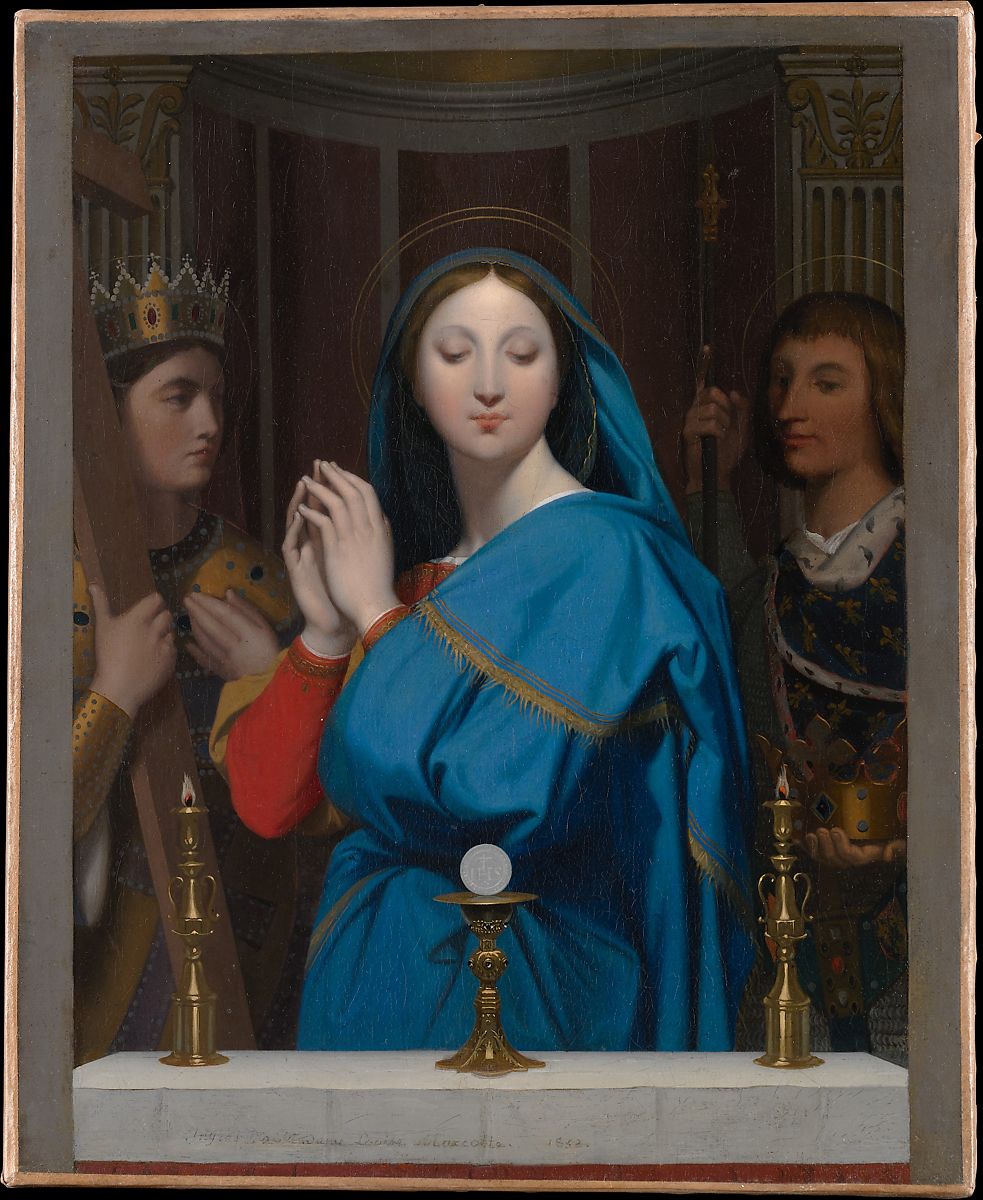
The artist Jean Auguste Dominique Ingres painted a scene showing Ictinus together with the lyric poet Pindar.
The Ionic orders
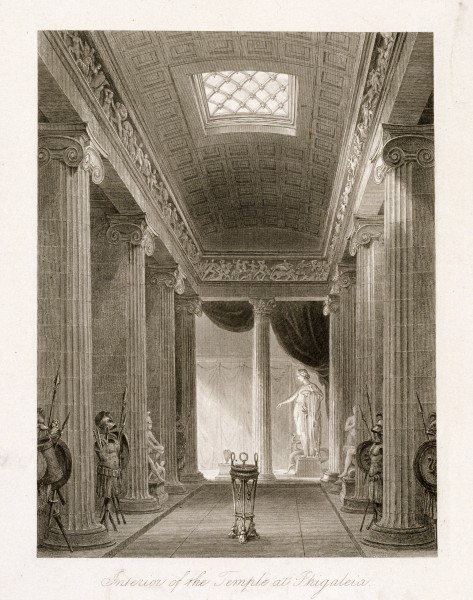
The architecture of the temple is one of the most strikingly unusual examples of the period, departing significantly from the norms of Doric and Ionic practice and including what is perhaps the first use of the Corinthian order and the first temple to have a continuous frieze around the interior of the naos. From the style of the frieze it belongs to the High Classical period, probably carved around 400 BC.
In classical antiquity, it was part of Arcadia. Bassae lies near the village of Skliros, northeast of Figaleia, south of Andritsaina and west of Megalopolis. It is famous for the well-preserved mid- to late-5th century BC Temple of Apollo Epicurius.
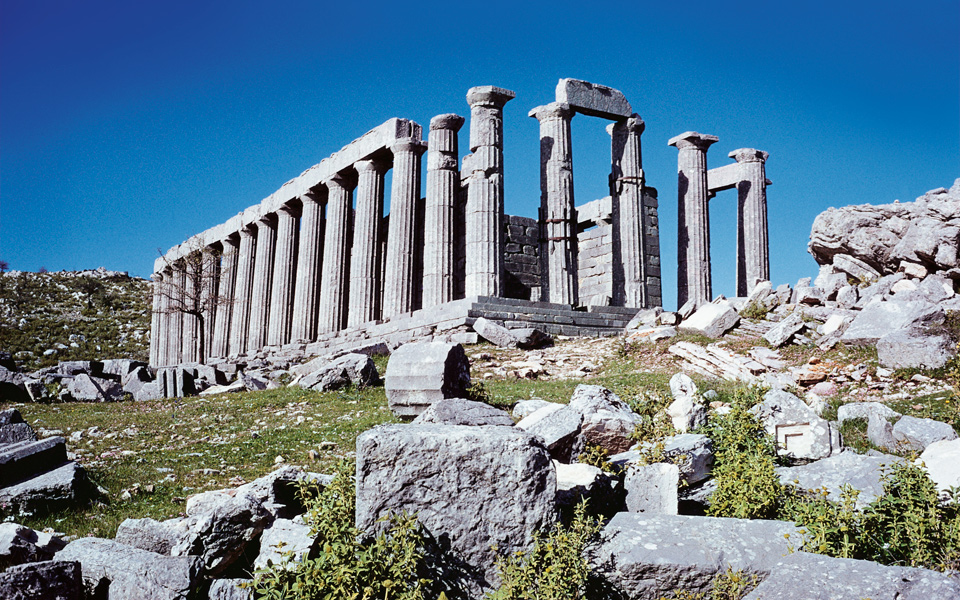
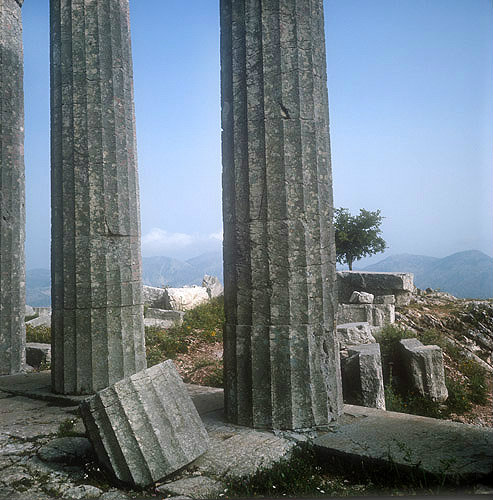
What were the obvious difference between all these columns?
Fluting:
The ionic orders we built slimmer than the doric orders, and the fluting for the doric was slimmer than the ionic pillars as well. I never really noticed this unique feature, but learnt that there was a reason for the flutes differing; “The number of hollow flutes in the shaft settled at 24. This standardization kept the fluting in a familiar proportion to the diameter of the column at any scale, even when the height of the column was exaggerated. Roman fluting leaves a little of the column surface between each hollow; Greek fluting runs out to a knife edge that was easily scarred.”
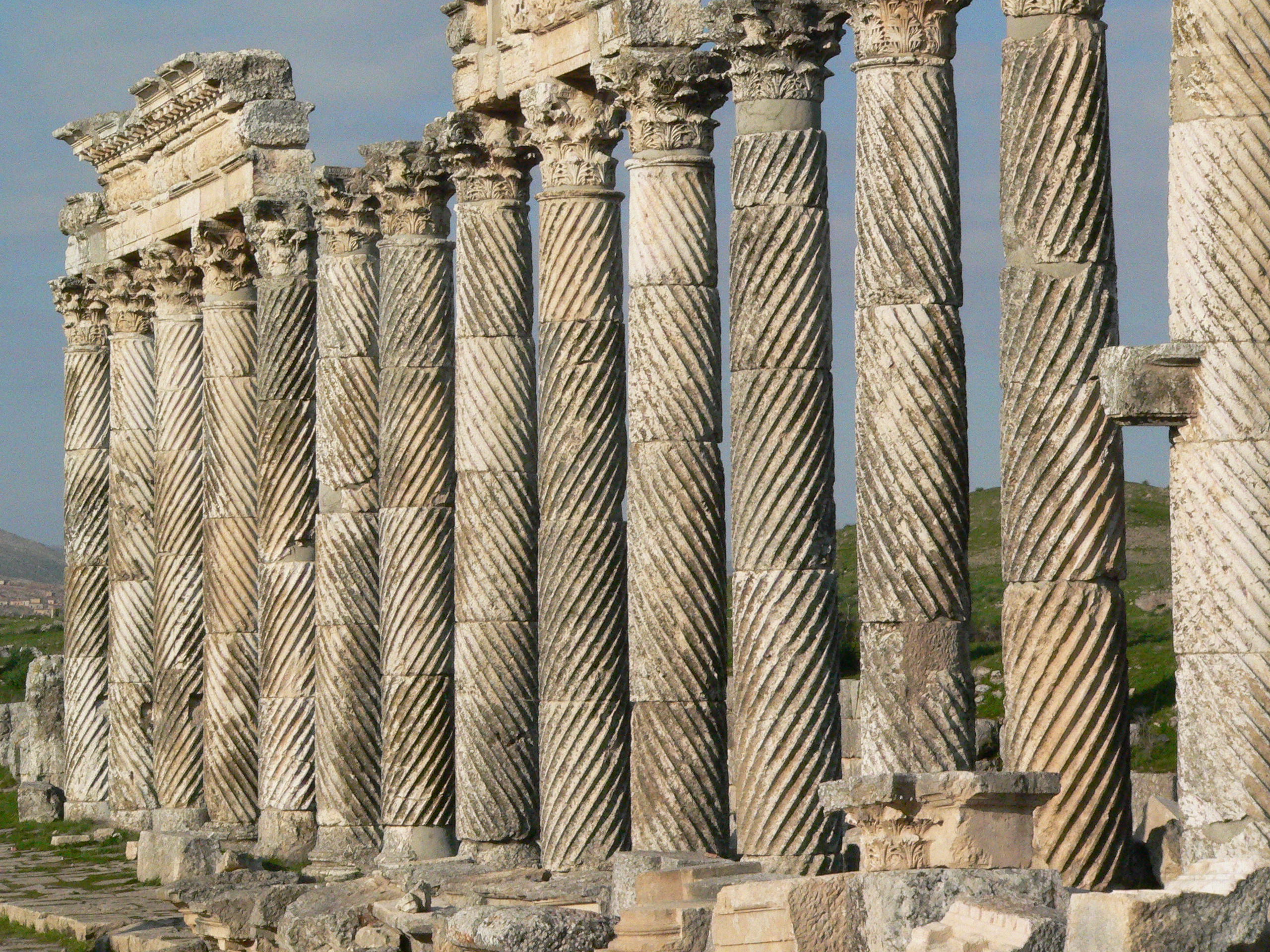
They certainly are elegant! I believe so, because of the way it runs from the base/stylobate all the way up the entasis of the column.
Fluting was used to make columns appear slimmer and to increase the sense of rhythm. It may also be incorporated in columns to make them look thinner, lighter, and more elegant.
Remember earlier on in this article, I mentioned that the entasis was a critical distinctive part of the doric columns? The entasis is the application of a convex curve to a surface for aesthetic purposes. The entasis on the doric columns make it look like the diameter decreases from the bottom upward, to give it the illusion that it is slimmer? Or it could even have been an engineering function which the greeks thought was a function of strength. The reasoning for the entasis width is still unknown, as remember we are looking back at the archaic period around 750 BC.
During the archaic period 8th century BC to 480 BC, the greeks created their own civilizations, culture, warfare, armies, legal court, greek literature and artistic pottery, poetry was composed orally, though the earliest poetry was that of Homer. Before Greece was overtaken by the roman republic, the greeks accomplished a lot within their own empire. The kingdom of Macedonia was one of the last great states of hellenistic Greece, before the gruesome murder of the macedonian royal pretender Andriscus, around 480 BC.
The image below shows the battle of corinth (146 BC), the last day before the roman legions looted and burned down the greek city of Corinth. The battle of corinth occurred prior to the complete occupation of the Roman empire over the greeks in the battle of Actium, in which Augustus defeated cleopatra VII and Marc Antony, and finally Alexandria, the last great city of Hellenistic Greece.

 Sketchez.art